Showing posts with label Sci-Fi. Show all posts

Sunday, December 15, 2013

Aliens - James Cameron

Commando movies were very popular in the U.S. in the late 70's and throughout the 80's. Movies were the main way the U.S. dealt with the Vietnam War trauma. When you really think about it, making entertainment movies is a very weird catharsis, but I guess different peoples deal with their tragedies in different ways.

Aliens is, among other things, a metaphore about Vietnam: a group of elite soldiers with sophisticated technology enter a hostile territory thinking they will wipe out the enemy in less than 5 minutes, just to discover that their rival is infinitely superior to them.

So, according to that, and contrary to its predecesor, Aliens is an action movie, though the horror component is still there. Aliens has rightfully been praised as a 2-hours shot of action, and is actually one of the best movies of the genre. The negative side is that Aliens banalized the omnipresent and ruthless monster of the first part. In the first part, one alien killed seven people in less than 24 hours; in this part, an entire army of aliens were not able to enter a compound defended by 5 people, one of which was a little girl.

Aliens (and its behind-the-scenes) is a movie worth watching mostly for prospective movie-makers. In light of the special effects available today, modern audiences may not feel as thrilled about its action scenes, and the gore scenes, though impacting back in the day, would make it to a PG-13 movie today.


Sunday, December 8, 2013

Alien - Ridley Scott

There are at least two reasons why it's worth watching Alien today, almost 35 years after its original release:


  • It offers a very sand view of the future. Humankind is finally able to travel across the Universe, but social inequalities are still there: the movie is nothing else but the story of a group of miners who have to risk their lives at the orders of their employer.
  • It reminds us that a good horror movie is the one where you barely see the threat. At one point in time, directors of horror movies got the idea that their job was to do fancy stuff with special effects. They're wrong, and they should watch Alien over and over until they understand why.

Tuesday, November 26, 2013

L'Île Mystérieuse - Jules Verne

Je vais redémarrer ma série de textes sur le sujet des naufrages, dont le premier texte a été sur Lord of the Flies. La thématique de L’Île Mystérieuse  est complètement opposée à celle de Lord of the Flies : le texte de Jules Verne donne au lecteur de l’espoir à l’avenir et à la technologie ; elle est aussi une histoire sur la rédemption humaine. Le message principal de Lord of the Flies est, par contre, que tout est perdu dès l’origine de l’humanité.

L’Île Mystérieuse représente pour les lecteurs avides de Jules Verne la fin de l’enfance. La repentance et mort du Capitaine Nemo, ce anti-héros qu’on voulait tous émuler, met en évidence son humanité et, d’ailleurs, la nôtre. La mort de Nemo représente notre passage à l’âge adulte. On ne peut pas pleurer avec le décès de Nemo comme on pleure quand Jean Valjean meurt: on sait très bien que nos larmes seraient la honte pour Nemo : quand le Nautilus devient un cercueil qui s’écoule jusqu’au fond de la mer, ceux qui ont grandi avec les romans de Jules Verne savent qu’il faut être un stoïque, que dorénavant, c’est nous contre le Monde ; on n’a plus de vraies références masculines à émuler.

Comme d’habitude chez Jules Verne, il y a dans L’Île Mystérieuse des visions sur l’avenir qui étonnent au lecteur d’aujourd’hui : sans parler du réchauffement de la planète, Verne prévoit la fin de l’économie basée sur le charbon et parle d’un futur où l’electricité sera produite avec la décomposition chimique des molécules d’eau : nous y sommes arrivés. Un homme de son époque, la confiance de Verne sur les avancements de la technologie et la raison humaine n’a pas de fin. Aujourd’hui, on sait bien que la même technologie qui sert à industrialiser la production  de nourriture peut être utilisée aussi pour tuer de milliers de personnes  très rapidement.

Comme tout l’ouvrage de Jules Verne, L’Île Mystérieuse est un livre daté, difficile à lire aujourd’hui à cause de sa longueur et sa structure basée sur le format de feuilleton, tellement commun dans le XIXème siècle. Ce livre est recommandé pour les collectionneurs -qui n’ont pas besoin de ce blog pour leur rappeler la relevance de ce bouquin- mais particulièrement, comme je l’ai déjà indiqué, pour tous ces enfants qui ont lu Vingt Mille Lieues de Voyage sous le Fond de la Mer, et qui veulent savoir ce qui s’est passé avec ce super-homme appelé Nemo. Les lecteurs au-dessus de 15 ans doivent, généralement, s’abstenir de la lecture de ce livre.


Monday, September 2, 2013

Elysium - Neill Blomkamp

I've read mixed reviews of Elysium. Though I personally liked the movie, one can make the case that it oversold its political agenda. The special effects are OK.

The only negative comment I can make about Elysium is the disconnect between the plea for a more solidary World on immigration, health care, human rights, and democracy, and the insipidity of Max, the hero. The problem is that Max is not trying to save the World but does it almost by accident; the fundamental problem of the Elysium dystpia i shta nobody is trying to do anything to improve the living conditions of the peoople living in Earth. Max just wants to heal himself, and when he realizes he has no hope that he decides to save the life of his friend's daughter. The guys who get health care for the people on Earth are Max's friends. Max really couldn't care less.

Elysium could have been a movie about resistance, about the left-behinds trying to take back what they could legitimately consider as theirs. Instead, we are offered a pathetic version of the Mexican-American Dream: a guy trying to go by himself to the place where the rich guys live. Blomkamp has reportedly said that Elysium is an allegory of life on Earth today. If he really thinks that collective action to improve the World is impossible, and that the only way things can improve is through fortunate coincidences, then he's probably more part of the problem than he realizes.


Monday, March 5, 2012

Jules et Jim - Francois Truffaut

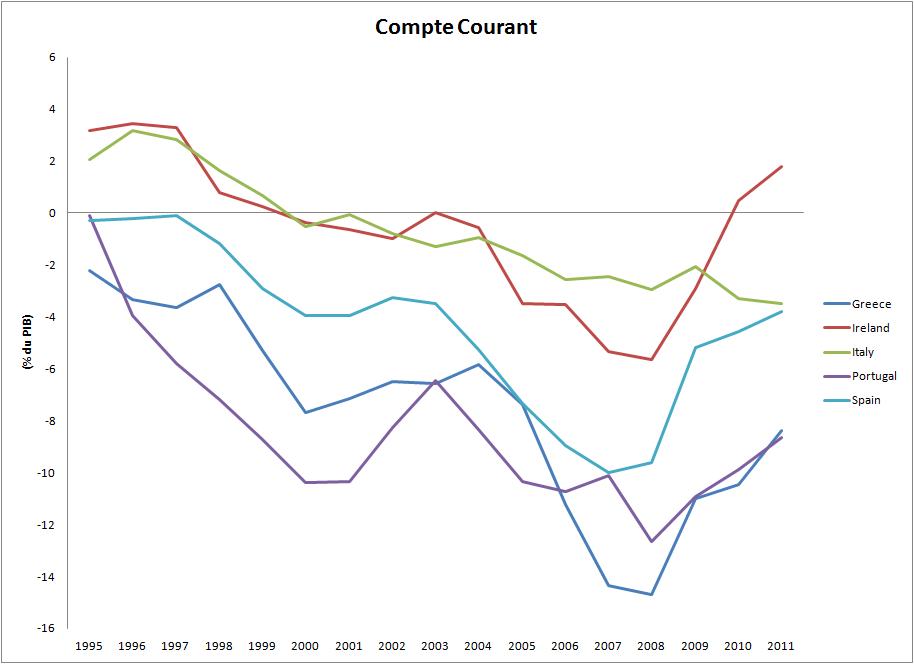
Je pense que je suis la première personne qui catalogue Jules et Jim comme un film de science fiction, mais je vais vous expliquer pour quoi je l'ai fait. Jules et Jim racconte l'histoire d'un triangle amoureux, mais c'est davantage le portrait de l'amitié entre un Francais et un Autrichien. Et c'est précisément pour cela que Jules et Jim est un ouvrage de science fiction irréalisable, comparable aux livres classiques de Jules Verne: la crise économique de la zone euro actuelle montre que les pays du Nord de l'Europe (l'Allemagne, les Pays Bas, l'Autriche, et les pays Scandinaves) sont incapables de subir à l'amitié ou  à la solidarité. Quel roman est-il l'équivalent Allemand ou Scandinave du Quichotte, example universel de noblesse et d'amitié sans limites? Et des Trois Mousquetaires, le roman qui parle sur la loyauté le plus connu du Monde? Il n'y en a pas, mesdames et messieurs.


Pour des raisons culturelles, géographiques, et socio-politiques, les pays du Nord ne connaissent pas de l'amitié ou de la solidarité. Les pays du Nord de l'Europe ont profité énormément du mauvais dessin de l'Euro et maintenant que la situation a éclaté ils regardent vers l'horizon et vendent l'idée que les habitants du pays du Sud sont tous des flâneurs.


Il faut d'abord rappeler que les pays du Nord étaient débiteurs avant 2003 et sont dévenus créditeurs immédiament après l'entrée de l'Euro. Or, les pays du Sud, qui étaient compétitifs en partie grace à leur taux d'échange vis-à-vis l'Allemagne, ont commencé à importer plus que ce qu'ils vendaient à l'extérieur, ce qui a ouvert un cercle vicieux d'endettement: si on pouvait décomposser les importation des pays du Sud, ont verait qu'ils ont commencé à importer des produits provenant du Nord (vous pouvez le faire vous même à Eurostat) et a emprunter aux banques Allemandes et Francaises (vous pouvez en servir aussi au BIS). Il faut noter aussi  que le comportement du compte courant de la France resemble plus à celui des pays du Sud qu'a celui du Nord, sauf que, au différence des pays GIPSI, l'ajustement n'y a pas commencé. La belle vie n'est pas finie en France, mais pour combien de temps continuera-t-elle?


Nos "amis" Allemands ont du mal a comprendre ces charts, ce qui ne parle très bien de leur système éducatif,  même s'ils le présentent comme l'un des meilleurs du Monde. 


Les habitants du pays du Nord, ou au moins leurs classes politiques et intellectuelles, n'hésitent pas un instant à diffuser l'idée que les pays du Sud profitent de leur génerosité, ce qui est un autre mensonge. L'Allemagne et l'Autriche peuvent aller aux marchés financiers et placer leurs bonds a un taux d'intérêt près du zero, donc négative en terms réels. Ce qu'ils font avec cet argent c'est capitaliser le Fonds Européen de Stabilité Financière, qui a donné des prêts vers l'Irlande et le Portugal au taux moyen de 5.3%. Voilà; la "solidarité européenne" n'est qu'une masque, une excuse, pour que les citoyens du Nord de l'Europe fassent un business au profit de 500%.  


Mais ce n'est pas tout. Ce qui est épouvantable c'est que les Allemands et ses "amis" Néerlandais et Autrichiens, pas conformes avec dégrader leurs parténaires Grecs, Espagnols, Italiens, et Portugais, autour du Monde, veulent que des pays en voie de développement comme la Chine ou le Brésil soient les financiers du sauvetage de la banque et des souverains européens via le Fonds Monnétaire International. 


À tous ces faits, nos "amis" du Nord de l'Europe répondent que les pays du Sud ont menti en ce qui concerne leurs chiffres du déficit gouvernamentale. Cela est vrai, mais l'histoire montre que on arrange les crises de dette extérieure via une dévaluation. Si cette option n'est pas disponible, comme il est le cas en Europe, il faut faire un bail-out aux gouvernements, et pas aux banques, comme la Banque Centrale Européenne l'a fait deux fois déjà dans les derniers trois mois.


Les Allemands sont les pires leaders de l'histoire. Ils sont les seuls à avoir le poids politique et économique pour résoudre cette crise, ce qui veut dire payer les dettes des pays du Sud, ce qui veut dire faire un bail out des banques Allemandes et Francaises, ce qui veut dire assurer les pensions des citoyens Francais et Allemands.


Sinon, Jules et Jim est un très bon film, même si la fin est extrêmement décevante, et même si, aujourd'hui on pense que ce film est l'histoire d'une dominatrix et ses deux joujous, et pas celle d'une femme amoureuse de deux hommes parfaits.


NOTE: Le source des charts est la base de données WEO September 2011 du FMI. Les projections commencent à partir de 2011.

Sunday, December 4, 2011

District 9 - Neill Blompkamp

District 9 is one of the best science fiction films ever made, and it was the big thing in the summer of 2009. The critiques about it were overwhelmingly positive, with the exception of those made by Nigerians, who complained that their fellow countrymen were depicted as cannibal gangsters -District 9 was actually forbidden in Nigeria.

One of the reasons behind the success of District 9 is that, it is a movie with a story, where special effects are just an ingredient of a plot instead of its central object. Think about Independence Day, which is the quintessential special effects movie, with a very basic story: aliens come to destroy the Earth and we must stop them. In Independence Day, the story basically serves the purposes of the special effects designer: the images of the White House exploding in the middle of an alien attack comes back to memory more easily than any part of the plot. If nothing else, the value of District 9 is that it tears down the idea that science fiction is inherently connected with special effects. They're not, but most people think they are because that's the way Hollywood has taught us to think about movies. An action movie with not-over-the-roof special effects can be successful if the story is good enough.

The comparison with Independence Day is interesting from an ideological perspective too. Filmed in the middle of the 1990s, a period of American hubris, the message is pretty straightforward: aliens are entities who come to destroy our World and we must be afraid of them. In fact, we will destroy them on our own because we are the only power on Earth. By the way, by "we" I mean "Americans." On the other hand, District 9, filmed after the dreams of a South African Rainbow Nation were shattered by reality, shows that aliens can be used as cheap labor and exploited, even in poor countries. Multinational corporations and mercenaries ("private security contractors") are used to deal with them. Aliens may not necessarily be evil, but since they are not human, they don't deserve equal treatment or entitlement to any rights whatsoever. It is interesting how the historical context and the country of origin determine how an encounter between aliens and humans will go over. I wonder how a Russian or a Syrian alien movie would look like.

Some people have tried to see a metaphor of South Africa's migration policies in this movie, but since the writer and the director have denied any political message in it, I won't talk about it.

Another reason for the exit of District 9 is having a good producer: Peter Jackson, who also produced the Lord of the Rings trilogy.

The website of District 9 is here, and is actually really fun.

Saturday, May 14, 2011

Predator 2 - Stephen Hopkins

"Shit happens"

Not many movies are, at the same time, representative of their age and ahead of their time. Predator 2 is one of them.

Like many movies of the 80s (Robocop would be one example), Predator 2 is set in an apocalyptic future where violence, pollution, and chaos disintegrate the social tissue. Predator 2 is set in Los Angeles in 1997, a city devastated by the war between the Colombian and the Jamaican gangs. The movie got it right on pollution, but wrong on the extent of urban violence, which is now contained in the immigrant neighborhoods. 
Also, the movie depicts Mexican immigrants as the innocent victims of the violence. Were a remake of Predator 2 to take place, the gangs would be composed of Mexicans and Salvadorians, and the victims would be Colombians and Jamaicans. That is how American popular culture is moved by clichés...

(Predator 2 also got it right on how ridiculously big is Los Angeles: according to the movie, an alien spacecraft can be hid in the sewage system and nobody would notice. Well, I am not sure about spacecrafts, but Los Angeles hosted the Olympic Games in 1984 and a large portion of Los Angeles was unaware of that)

I would like to stop for a bit on the lack of of apocalyptic movies in the 1990s and 2000s. The Reagan years were very tough for the US, no matter what the Tea Party and the nostalgic conservatives say: urban unemployment was rampant and cocaine was spreading faster than the Universe (people were also learning to make crack), making the downtowns of the largest cities very dangerous places. The apocalyptic movies of the 80s are set in a distant future because the studios wanted to portray the image of a happy country, in line with Reagan's "Good Morning America". The solution found by directors, who after all portray what they see,  was to set their stories in the future... After the collapse of the Soviet Union and the healthy economic expansion of the 90s, nobody thought about Apocalypse -or if somebody did, could not find funding. After 9/11, I guess, Americans think that we are finally living Apocalypse, so there is no need to tell stories about the future...

Back to Predator 2, now.

As weird as it sounds today (2011), Predator 2 has an ecological message: by telling the story of an alien who likes to hunt humans for fun, the movie tries to send the message that hunting animals is bad. That is what the director and the writers say in the "Making of...", which was recorded at the same time as the movie. The fact that Predator 2 is currently seen as an action popcorn mediocre movie and not as an ecological parable, is a testimony of the changes in aesthetic values lived over the last 30 years.

Another interesting change concerns masculinity and what an attractive man should look like. Most action heroes of the 80s are sweaty guys on steroids not caring about being violent and gross. It would have been unsurprising if Arnold or Stallone farted in the middle of an action scene. The action heroes of today dress on Prada, do not sweat, and are always politically correct (the exception is, sometimes, Russell Crowe). I guess that change in the concept of manhood should be enough to prove that women are taking over the World...

I personally think that Predator 2 is better than the first one: there are more action scenes confronting the monster and human beings rather than humans against each other. The special effects are more elaborate and the monster has more personality and weapons. But the movie was a commercial disaster in the US (the movie had a positive return thanks to its sales abroad), partly because it was ahead of its time. The movie was rated R when it was released because it was considered too violent and containing too much explicit language (it also has a scene of sex). Today, Predator 2 would be a PG-13 easily. The movie just shows bones and skulls instead of guts and explicit violence scenes, as most action movies do today. What was considered excess of blood in the 1980s is a picnic for Tarantino.

And the other sad thing of Predator 2 is that it is really hard to compete against Arnold Schwarznegger, even if I think that Danny Glover did an excellent job as the monster hunter.

Long story short: only fans will find that Predator 2 is a good movie...


Sunday, May 8, 2011

Alien vs. Predator - Paul W. S. Anderson

"And they use us like cattle"
-Sebastian de Rosa (Raoul Bova)


Alien vs Predator (AVP) was one of the most expected movies in the History of the sci-fi genre but it was disappointing. I mean, the movie is just a bunch of dark against dark on darkness, and scenes with humans take a lot of time. People would have liked to see the monsters fighting against each other. Alas, action scenes are actually scarce. The structural problem with the Alien and Predator movies in general is that they have to be shot with little light; otherwise, it would be obvious that the characters are just people in disguises. But then, the question arises: why are we still doing movies like this in the traditional way? Would not it be more effective to computerize everything, get rid of humans, and  have more action sequences?

Here is the trailer of DC Universe Online, a recently released video game. The game itself is really bad, but the trailer could be the basis for a good movie. And with better voices, nobody would miss human actors. 


Quite honestly, AVP could have been worse. The sequel, Alien vs. Predator: Requiem goes over the top with the gore scenes. The directors tried to use blood and guts as a substitute for action. I will not talk about it, in case you wonder...


Here is the trailer of AVP.


Wednesday, May 4, 2011

Predator - John McTiernan

"If it bleeds, we can kill it"
-Dutch (Arnold Schwarzenegger)

Predator set the standards for modern action movies. The scene of the palapa is one of the most exciting action sequences ever filmed. Given the standards of the time, the implicit political messages were kept to a minimum.

Predator is the ultimate popcorn movie.

And it deserves to praised as such.

Also, if you ever happen to watch the behind-the-scenes, you will understand why Arnold was elected as governor of California.


Predator was filmed in Puerto Vallarta, Mexico. Rambo II was also filmed in Mexico -Guerrero, to be precise. Twenty years ago, it was common to film action movies in the Mexican Pacific coast. But then, the Vietnam related movies were no longer in (so there was no need to simulate a tropical forest in a safe environment), and the relative costs of filming in Mexico were ridiculously high in comparison to South East Asia or North Africa, when these countries opened up to trade and investment. I guess it was cool to see Arnold and Stallone around.

You can still visit the site where Predator was filmed. The helicopter is still there and there is a restaurant next to the lake of the final battle.