Heureusement, on a youtube:
Showing posts with label Japan. Show all posts
Showing posts with label Japan. Show all posts
Thursday, October 31, 2013
Aux Résistances - Noun Ya
Aux Résistances est un album magnifique. Les talents de Yann Pittard et Naissam Jalal se mèlent pour créer Noun Ya, aboutissant à une création minimale et merveilleuse au même temps. Il est domage qu'il n'y aie plus de matériel sure le site Myspace du duet et qu'on ne trouve l'album que chez des marchands japonais.
Heureusement, on a youtube:
Heureusement, on a youtube:


Saturday, June 22, 2013
Saving the Sun: A Wall Street Gamble to Rescue Japan from Its Trillion-Dollar Meltdown - Gillian Tett
The culture of Wall Street tended to focus on the present, not the past, since it assumed that the world could be constantly remade anew, that it was possible to rebound from a defeat and start again. That was not how most Japanese viewed the world: To them, the present was inevitably anchored in the past, with ties that could be ignored in polite company, but never entirely severed.
Saving the Sun is a great book. Product of years of hard work and more than 200 interviews, this book tells the story of how Long Term Capital Bank, one of the most important banks of Japan after World War II, became Shinsei Bank, "the most profitable private equity deal of all time."
Saving the Sun is a book about Japan's history, finance, and management, and can be seen as a case study for inter-cultural mergers. All that for 0.99 in the Kindle Edition.
Saving the Sun is a great book. Product of years of hard work and more than 200 interviews, this book tells the story of how Long Term Capital Bank, one of the most important banks of Japan after World War II, became Shinsei Bank, "the most profitable private equity deal of all time."
Saving the Sun is a book about Japan's history, finance, and management, and can be seen as a case study for inter-cultural mergers. All that for 0.99 in the Kindle Edition.
Thursday, June 13, 2013
Japan's Great Stagnation - Hans-Werner Sinn (ed.)
Edited in 2006 by Michael M. Hutchinson and Frank Westermann as part of the CESifo Seminar Series in Economic Policy, Japan's Great Stagnation presents 9 papers trying to explain the reasons behind Japan's prolonged economic downturn.
Though it might seem outdated, I recommend this book for three reasons:

The introduction touches tangentially the issue of misalligned property prices as one of the drivers of the economic crisis at the beginning of the 1990's. I think that the role of property prices in the economy has not recieved all the attention it deserves. Stephen Ceccheti issued a fantastic paper in 2008 on the topic, but I haven't too much since then. The BIS presents time series of property prices for free here.
Though it might seem outdated, I recommend this book for three reasons:
- Prophetically, the book's subtitle is Policy Lessons for Advanced Countries. In light of the recent developments taking place in the West since 2008, this book is a must read: the U.S. and Europe shouldn't spend more than 20 years with suboptimal growth.
- In the introduction, Hutchinson, Ito, and Westermann mention that the Germany is the most likely country to follow Japan's steps. With hindsight, that statement was clearly a mistake: Germany is the only advanced economy growing at relatively decent rates. The Euro and the common monetary policy explains most of that: what the common monetary policy has implied is that the Greek people pay the lack of transparency of the German banks.
- In their paper, Kunio Okina and Shigenori Shiratsuka argue that the zero interest rate policy failed because it was unable to change inflation expectations among bond traders. It is too early to say whether Abenomics succeeded changing expectations, but if the developments of the last week are worth something, I'm afraid somebody will update Okina and Shiratsuka's work with more recent data...
The introduction touches tangentially the issue of misalligned property prices as one of the drivers of the economic crisis at the beginning of the 1990's. I think that the role of property prices in the economy has not recieved all the attention it deserves. Stephen Ceccheti issued a fantastic paper in 2008 on the topic, but I haven't too much since then. The BIS presents time series of property prices for free here.
Sunday, August 12, 2012
Throne of Blood - Akira Kurosawa
People from the West tend to see Kurosawa's Throne of Blood as an adaptation of Shakespeare's Macbeth (see, for instance, Wikipedia , IMDb, and The Guardian, just to mention Google's top 3). This is obviously an oversimplification. Throne of Blood is based on Macbeth but it goes beyond that: it incorporates elements of Noh theatre and is not based on the Western ethos of making good triumph over evil. Instead, the plot of Throne of Blood is circular, with the cycle of violence repeating again and again, without making clear references to morality. The World of Throne of Blood is one where power seeking is the motive of all the characters and moral issues are left outside. These fusions of Buddhist, Japanese, and Western elements were common in Kurosawa's career and gained him criticisms in Japan (where he was seen as a sold-off) and praised in the West (where he was seen as the only understandable Japanese filmmaker)
I don't know if I should recommend Throne of Blood. The movie is obviously a masterpiece, like most of the material produced by Kurosawa. The camera work is simply fantastic, and so are the make up and the attire of the actors. However, modern audiences have lost the sensibility to appreciate silences in movies, which is a constant in this movie. If there is one reason why I would still recommend Throne of Blood to a movie viewer of the 21st century the scene where Taketoki Washizu is killed: much more dramatic and sadist than anything you've seen so far and with far less blood.
Throne of Blood has been re-issued to the market recently by The Criterion Collection.
And youtube auto generated a channel for the movie, available here (I'm obviously no responsible for the content of the channel or any copyrights infringement, etc).
I don't know if I should recommend Throne of Blood. The movie is obviously a masterpiece, like most of the material produced by Kurosawa. The camera work is simply fantastic, and so are the make up and the attire of the actors. However, modern audiences have lost the sensibility to appreciate silences in movies, which is a constant in this movie. If there is one reason why I would still recommend Throne of Blood to a movie viewer of the 21st century the scene where Taketoki Washizu is killed: much more dramatic and sadist than anything you've seen so far and with far less blood.
Throne of Blood has been re-issued to the market recently by The Criterion Collection.
And youtube auto generated a channel for the movie, available here (I'm obviously no responsible for the content of the channel or any copyrights infringement, etc).
Sunday, February 26, 2012
Hiroshima Mon Amour - Alain Resnais
Hiroshima mon amour is one of the most famous French films, at least in Europe. The movie has not had a lot of success in the United States, first of all because it is not an American movie, but also because the first 15 minutes presented images showing the casualties caused by the atomic bombed dropped by the American army in Hiroshima. The organizers of the Cannes Festival refused to screen Hiroshima mon amour. At the time, movies presented in Cannes were preceded by an image of the producers flag. Since Hiroshima mon amour was a French-Japanese production, and the organizers thought that the scenes of the aftermath of the bombing were too un-American (the movie was filmed in 1959, right in the middle of the Cold War), they simply did not allow Alain Resnais to present it in the festival.
In any case, Hiroshima mon amour has been praised since its release mainly because of its photography, its "fragmentation of time" (i.e., the mixing of flashbacks with current reality) techniques, its soundtrack (composed by Giovanni Fusco), and the fact that its plot was written by Marguerite Duras. Hiroshima mon amour inspired the French nouvelle vague. My American and younger readers might want to know that Memento would not exist without Hiroshima mon amour.
You can read more technical and sophisticated comments about Hiroshima mon amour here, here, and here. I would like to mention just three general reflections that came to my mind after seeing Hiroshima mon amour twice:
- Silence in itself does not provide any information to the viewer. Silence is (must be) used to make pauses and create tension, expectations. More silence = more expectations to fulfill. That is why nouvelle vague movies became a caricature of themselves: they abused of silence instead of enjoying it.
- Emmanuellle Riva was not a particularly attractive woman. In fact, Duras specified that the actress had to be "more seductive than beautiful." But we do not remember Riva for here physical appearance. The fact that the movie is in black and white allows us to focus on her acting and on the feelings she is trying to convey. Black and white enhance the theatrical character of movies, forcing the viewer to focus on performances instead of appereances. You can reach a similar conclusion after seeing Marlene Dietrichs Blue Angel.
I was able to find a full version of Hiroshima mon amour on Youtube, pasted below. This video has been viewed only 10,500 times. At the moment I'm writing these lines, though, Amazon has only 3 dvds of Hiroshima mon amour in stock. Probably people are finally willing to pay for movies (NOT).
Saturday, January 7, 2012
The Cove - Louise Psihoyos
Stereotypes are a fact of life. Movies that break them are good.


When people think about Japan and the Japanese people, this is what they have in mind:
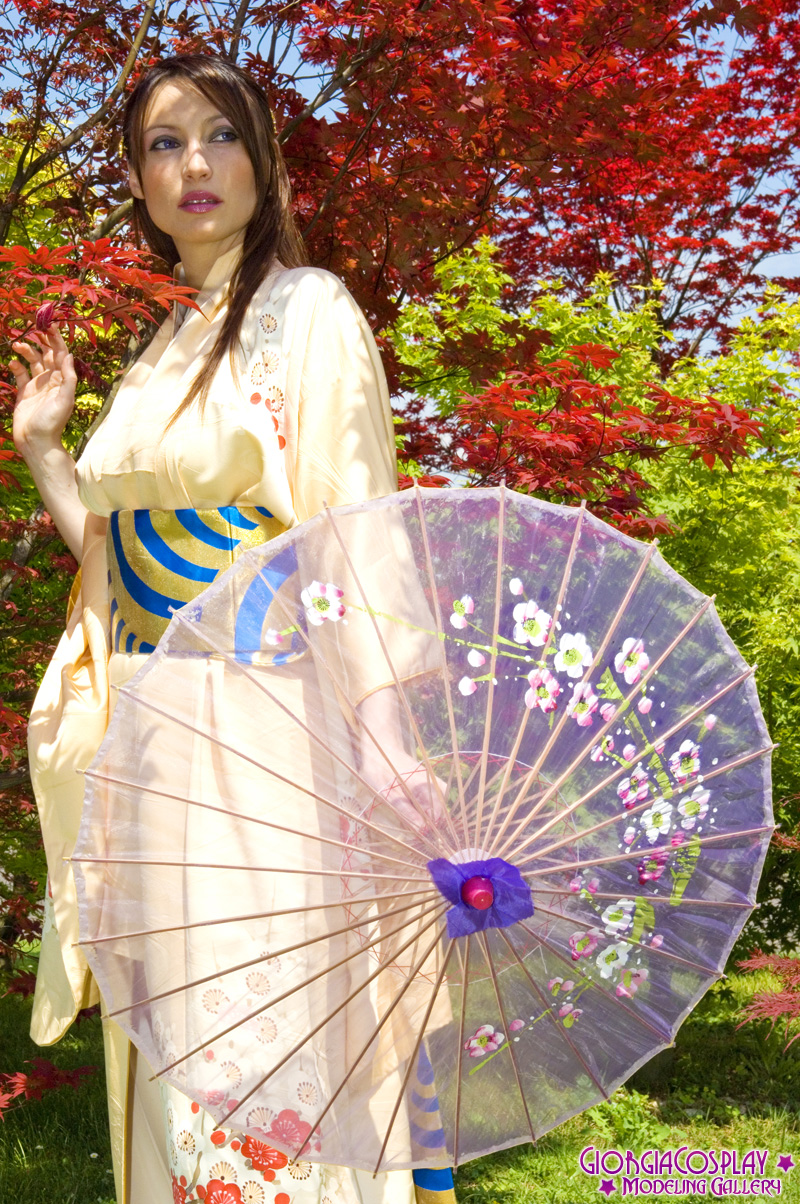
Source: Deviant Art
Or:
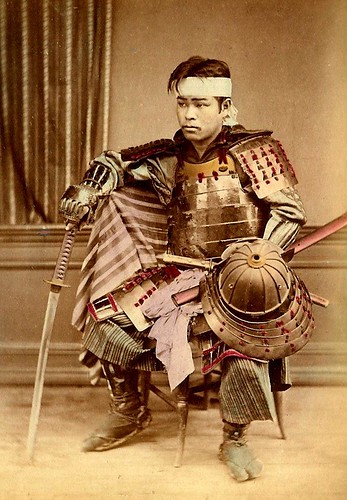
Source: flickriver
Or probably:

Source: Lifefashionfy.com
People who have traveled have this in mind when they think about Japan:

Source: Cure Byte
The Cove will take these stereotypes out of your mind. Instead, you will see Japanese as:

(the fishy things in the boat are dolphins, the boat is floating on a blood-tainted beach, and the people on the boat are Japanese dolphin hunters)
Dolphin hunting is an very important part of Japanese culture, and the Japanese government subsidizes it to annoy the West.
It could be worst. They could be working on getting atomic bombs like Iran, building a mighty navy in the Pacific like China, or opposing Security Council resolutions against nasty Arab dictators like Brazil, India, South Africa, Russia, China (again) or Germany (Germany is not really Western; if they were, they wouldn't be sitting while the European project collapses).
The Cove is a great documentary. And the website is here.
Subscribe to:
Posts (Atom)